Saturday, October 15, 2011

Parents are competent thinkers, you are not alone

October 1, 2011: Week Three: Parents are competent thinkers, you are not alone

Okay, so remember how I mentioned last week that parents were pleasantly relaxed? Well not so much this week. There was one parent in particular that certainly was absorbed and became a nuisance to everyone. Her daughter feared playing the first two weeks, sobbed through the entire hour, and kicked up her heels in refusal to play. This is quite understandable; she is five years old after all.

Today this little girl was driven to participate since one of the coaches boosted her up and placed her onto the field. She chose to chase after the ball and unexpectedly scored a goal. The ball shot directly into the opponent’s net. Everyone thought it was adorable and just chuckled. So, she scored a point against her own team but it wasn’t a big deal. Until her mother made it one that is.

This mom is typically pretentious and irritating when she speaks. The air carries her voice like the piercing toot of a thunderous train approaching. My ears ached. I thought it was commendable that she praised her daughter for generating the goal while concealing the fact that it was for the opposing team. The girl’s face lit up, sparkling like a shiny star on a clear night, and she was developing a strong–willed determination to give it her all. She was genuinely enjoying herself. It was a pleasure to see her involved and confident especially after witnessing her whimpering for the first two weeks. It truly IS all about the kids. So I and other parents alike were pleased. Although we were down one point, that didn’t matter much.

googleimages/blogs.ajc.com

However, her mother made a spectacle of herself regarding her daughter’s goal. She stridently boasted about how her daughter scored, and screeched across the field to her daughter (which is discouraged by coaches and mentioned in the rules as a “do not”). She approached parents demanding that the situation not be revealed to her daughter. Not one parent had that thought in mind. Doing so would crush the little girl’s spirit, don’t you agree? Why would any parent want to discourage a five year old from succeeding?

Her mom felt that it was her obligation to explain to every parent, in a child–like manner, that her daughter’s discovery of this fact must be prevented at all costs. For the remainder of the game she was quite obnoxious, theatrical, and excessively prideful. I understand that as a parent you are delighted that your child does well and chooses to participate. However, do not underestimate the intelligence of others please. We are all well aware that this piece of information should not be disclosed to the child. It is not necessary to loom about attempting to clarify it in such a manner that is insulting and demeaning. Do not patronize other parents please! It is not appropriate and not appreciated. These parents are competent thinkers, you are not alone.  

When I arrived home, I uncloaked the negativity that clung to me from dealing with this mom. I later noticed how this mom was boasting on a particular social networking site about how her daughter scored a goal and was the best player on the team. She exaggerated to the point of creating the illusion that her daughter was ready for a professional position tomorrow. My initial reaction was disgust. And I will tell you why. I really do not appreciate when people lie, even though it may be minimal. It disturbs me.

I am pleased that this little girl came out of her shell; I am content that she gained confidence, and I am thrilled that she will make a great asset to the team. However, I and others were frustrated with her mom. She was nauseatingly prideful, condescending towards others, and fibbed about what actually took place. Give other parents a little credit please.

Then I just laughed and went to my best friend’s wedding.

Friday, September 30, 2011

From the sideline, “Watch and Learn”

September 24, 2011: Week Two: From the Sideline, "Watch and Learn"

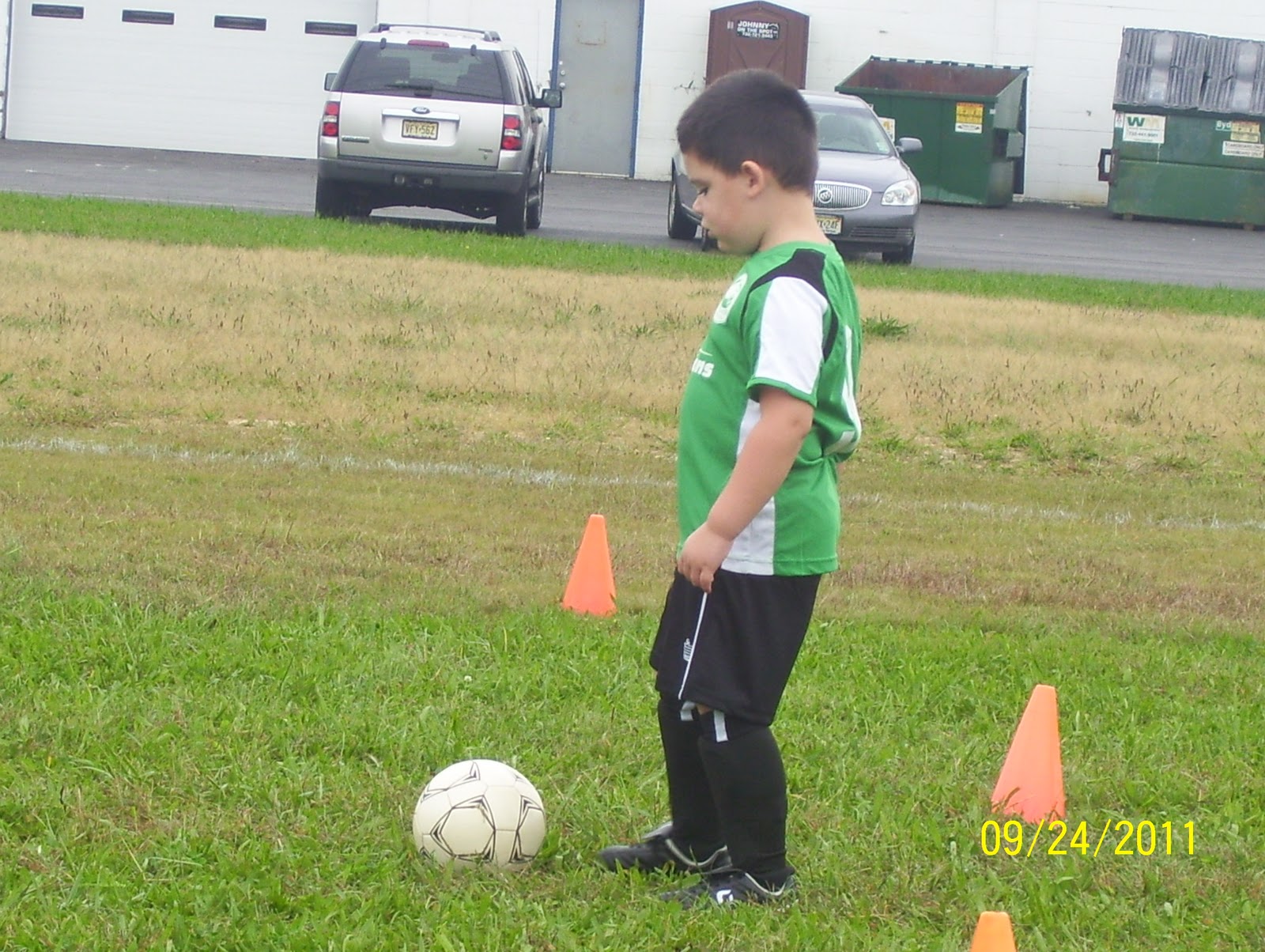
Week Two proved to be a better week than the first. The coaches were well prepared and more organized and the children were inspired to play. The structure of disorganization that lingered from last week seemed to magically dissipate. Once more, Freddy did well in practice. He sported a smile of enthusiasm that illuminated his entire face when practicing a drill of kicking the ball back and forth to one of his teammates. In the moment, he was content and when he is happy, I am happy.

Practice ended, and the game began. Echoing last week’s performance, my son decided that he was going to escape from the field and sit the game out once again. Free from outbursts, he simply walked away. Well that was an improvement from last week, wouldn’t you agree? Unlike the prior week, I was prepared. His small, child–sized, outdoor camping chair was parallel to mine and I assumed that it would serve the purpose of taking small breaks. Not so.

I felt more at ease now than the previous week about him sitting out. I decided that I would be supportive whether he chose to play or not. I decided that I would be silent from spewing out discouraging comments and avoid causing him discomfort by attempting to force him. I did make the effort however, to encourage him but I did not forcibly insist that he play. I elected to allow him to make the choice. I was determined to let him decide on his own action. He suggested that he “watch and learn”.  This is a sentimental phrase that he and I frequently share with each other. I agreed with delight.

The other players were focused and playing well. They were attentive to the coaches and to the game. I am happy to report that our team won. Last week I could not even tell you what the score was, I only knew that we lost. This week we won 2–0. Improvement was made by players, coaches, but most of all, the parents. Parents seemed more confident and less stressed. I, myself, consciously chose to follow rules in the Parent’s Soccer Survival Guide and remember that “The game is for the children” and “Let them learn at their own pace”.

Allowing Freddy to make his own decision of sitting this one out, gave me the freedom to enjoy spending time with him, prevented me from barking out commands, and removed the possibility of placing high expectations on him when he just isn’t ready. He will participate when he is ready. So from the sideline, my son and I watched and cheered his teammates on.

The coaches taught me a valuable lesson this week. The attitude that came about was a positive one which focused on accepting that the little ones would let them know when they were ready to engage. After all, these little ones are just four and five years old. If it’s not fun now, it never will be. It is easy for parents to get carried away as they want their child to succeed. The real success unfolds when parents allow their children to breathe, to gain confidence, and to have fun.

Freddy is a visual learner. “Watch and learn” is an effective tactic for him. As he watches his team move up and down the field, he will learn how to play the game. Once he feels comfortable, he can join in.

I just want him to have fun.  

Tuesday, September 20, 2011

Calling all Rookies!

September 17, 2011: Week One: Rookie Week

It’s official. I have become a soccer mom, a nice little jump up from being identified as a soccer aunt. I have been inducted into the soccer mom subculture although I think I had my foot in way before soccer started.

My “baby boy” Freddy who just turned 4 years old in July began playing soccer for the first time and although he is familiar with knowledge of what a soccer ball looks like, he has limited understanding of how to play the game.

There was a disorganized structure in the air; no one really knew how to untangle it. Many new parents and children surfaced and I was glad to see a few familiar faces from my son’s preschool.

One of the other rookie moms whispered to me, “There should be a special needs soccer team, don’t you think?” She wanted her other son, who is autistic, to have a similar opportunity as his sibling. She did not want him to develop a disposition of irritation as he sits on the sideline watching his brother play. I thought that was a very interesting point. With an increased population of children with special needs, why isn’t there a special needs team?

Practice begins. With his mommy, daddy, and grandparents cheering him on, Freddy’s confidence flaunted through his high–spirited smile. During the first half hour of practice, he did remarkably well. I was expecting some crying, tantrum, and any behavior he could muster up to alert me that he did not want to participate. To my blissful surprise, he appeared to be having fun during practice drills. Great, I thought, he is going to enjoy this. It’s going to be easier than I had imagined it would be.
 

The game begins. A few minutes into the first game of the season and Freddy’s first game ever, he comes sprinting off of the field. My thoughts were premature as he did not disappoint, crying and carrying on displaying HIS finish. He was done. I tried to encourage him to get back into the game but he was reluctant to my nudge. He was not the only rookie acting out this willful debut. There were four other players on his team also crying and uttering that they did not aspire to play.

I became increasingly nervous. As a rookie mom, I did not know exactly how to handle this situation. Although I had been to my nieces’ soccer games numerous times, this was new territory for me, and for my son. I glanced around at the other “new” parents and witnessed that they were also disheartened. Unsure of how to encourage their child without dipping into negative reinforcements, each novice parent, including myself, did the best we knew how to do. Should we expect coaches to intevene and inspire young new players?

It seems odd and quite funny to me that all five players who had beginners’ anxiety were all on the same team, my son’s team. It should come as no surprise then, that our team lost. Don’t laugh at me when I tell you that I cannot even convey what the final score was. I was so diligent in trying to drive Freddy back into the game. I was not alone.

Hmmm, where is that survival guide for new parents when you need it?

I do not want to pressure my son so far as to seem that it is forcing him to play, but at the same time I do not wish for him to learn that it is acceptable to quit after not really trying. When is enough, enough?

Calling all rookies, parents and children alike, get back into the game.

Let’s see what next week brings. I’m trusting that Week Two will create a better outcome. Maybe I will even be able to report on the final score. Maybe Freddy and the other rookies will play in the game.

Here’s hoping.